

Press Release
South Africa’s Thicket Restoration Named a UN World Restoration Flagship
Key Facts
- In December 2025, the United Nations Environment Programme (UNEP) and the Food and Agriculture Organization (FAO) named South Africa’s thicket restoration as a World Restoration Flagship under the UN Decade on Ecosystem Restoration (2021–2030).
- The recognition covers a collective movement of over 60 organisations working to restore 800,000 hectares of degraded subtropical thicket across the Eastern Cape — one of the most ambitious restoration efforts on the African continent.
- Imperative’s Spekboom project, developed in conjunction with NatCarbon Africa, is one of the private-sector restoration initiatives featured within this flagship landscape.
World Restoration Flagships are UNEP’s highest recognition for large-scale, long-term ecosystem restoration efforts. On 4 December 2025, ahead of the seventh session of the UN Environment Assembly (UNEA-7), three new flagships were announced in Australia, Canada and South Africa.
South Africa’s thicket biome — once dense with native vegetation and wildlife — has lost more than 80% of its original coverage, primarily through decades of unsustainable livestock grazing. The flagship recognises a multi-decade, multi-stakeholder effort to reverse that degradation through spekboom (Portulacaria afra) planting at landscape scale.
The broader initiative aims to restore soil resilience, sequester carbon, provide drought-resistant fodder for livestock and wildlife, and create rural employment in one of South Africa’s most economically disadvantaged regions.
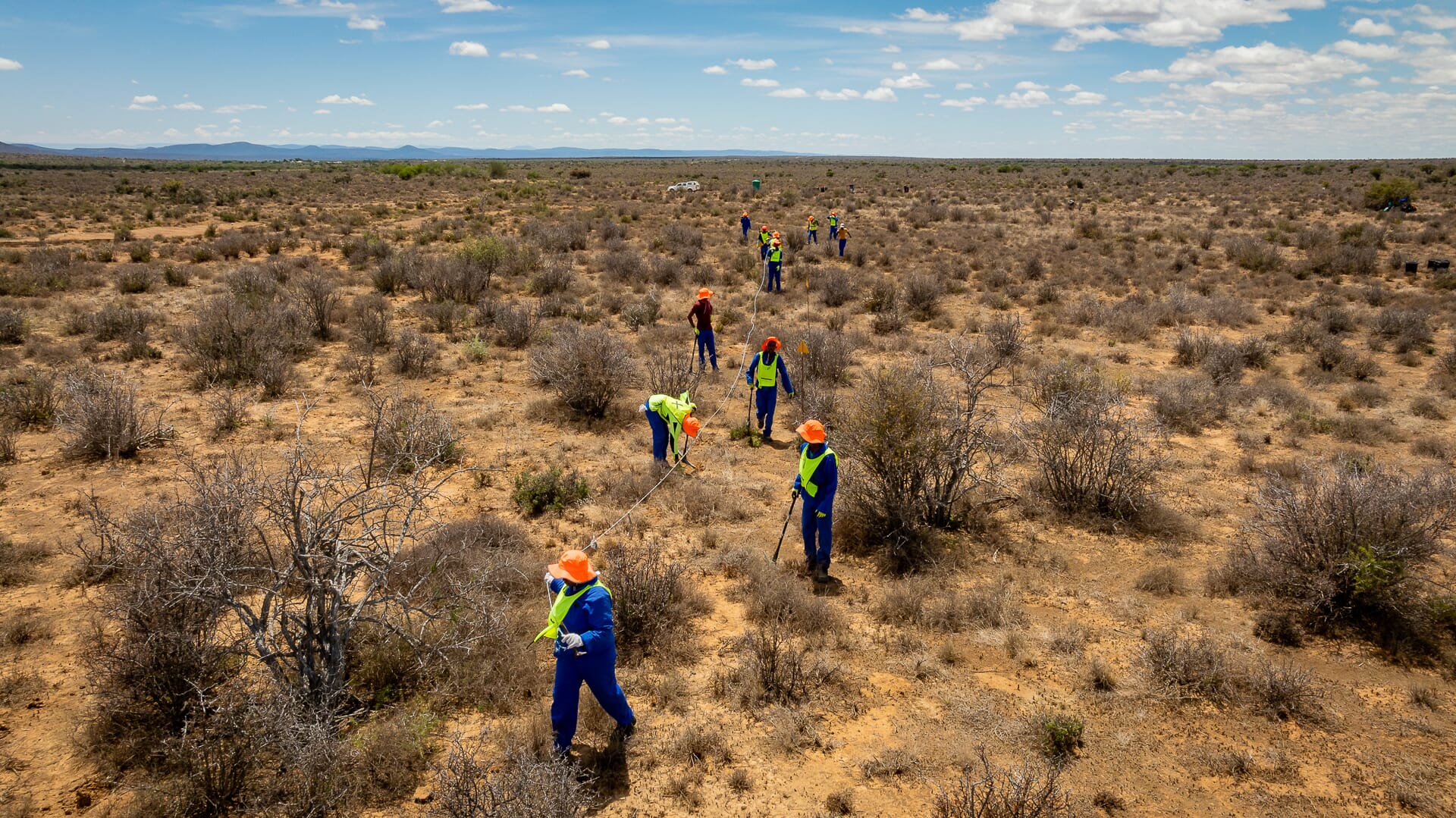
Our Spekboom project sits within this flagship landscape. Phase 1, which began in May 2024, is restoring 10,000 hectares of degraded Albany thicket through active replanting of native spekboom, with subsequent phases targeting 100,000 hectares at full scale. We are proud to be contributing to this nationally and internationally recognised restoration effort alongside the many other organisations and communities doing critical work across the Eastern Cape.
For more information on the UN World Restoration Flagship programme, visit the UN Decade on Ecosystem Restoration.
To learn more about how UNEP has covered the restoration work in this landscape, read their feature: How “miracle plant” spekboom is helping revive South Africa’s Eastern Cape.